


Written by Skinovate Content Team | Medically Reviewed by Dr. Sushil Chaudhary On September 07, 2026
Table of Contents
- What Is FUE Hair Transplant?
- What Is DHI Hair Transplant?
- DHI vs FUE: Key Differences
- Pros and Cons of Each Method
- Is DHI Better Than FUE?
- DHI vs FUE Hair Transplant in Pune
- How to Choose the Best Hair Transplant Clinic in Pune
- Conclusion
- FAQs
Key Takeaways
- DHI is a type of FUE. The main difference is how grafts are placed.
- DHI uses a pen-like implant. Traditional FUE makes channels first.
- Neither method wins in every case. Surgeon skill matters more than the name.
- DHI often costs more and takes longer. FUE suits larger bald areas.
- Only a scalp assessment can tell you which option fits you.
Introduction
You search for a hair transplant and see two names everywhere: DHI and FUE. Both promise natural hair. Prices differ. Claims differ. It is easy to feel lost.
So what is the real story behind the DHI vs FUE hair transplant debate? The short answer is simple. Both can give natural, lasting results. The better choice depends on your hair loss pattern, your donor hair and your goals.
At Skinovate, patients in Pune ask us this question almost every week. This guide gives you a clear, honest answer so you can decide with confidence.
What Is FUE Hair Transplant?
FUE stands for follicular unit extraction. The surgeon removes hair groups one by one from the back of your scalp. This is the donor area. These hairs resist balding, so they keep growing after they move.
Here is how it works:
- The scalp is numbed with local anaesthesia.
- A tiny punch tool takes out single grafts.
- The surgeon makes small channels in the bald area.
- The grafts are placed into those channels.
FUE suits wide hairlines and crown areas. It can cover large areas in one session. Scabs usually settle in 7 to 10 days. Your surgeon will give you your own timeline.
What Is DHI Hair Transplant?
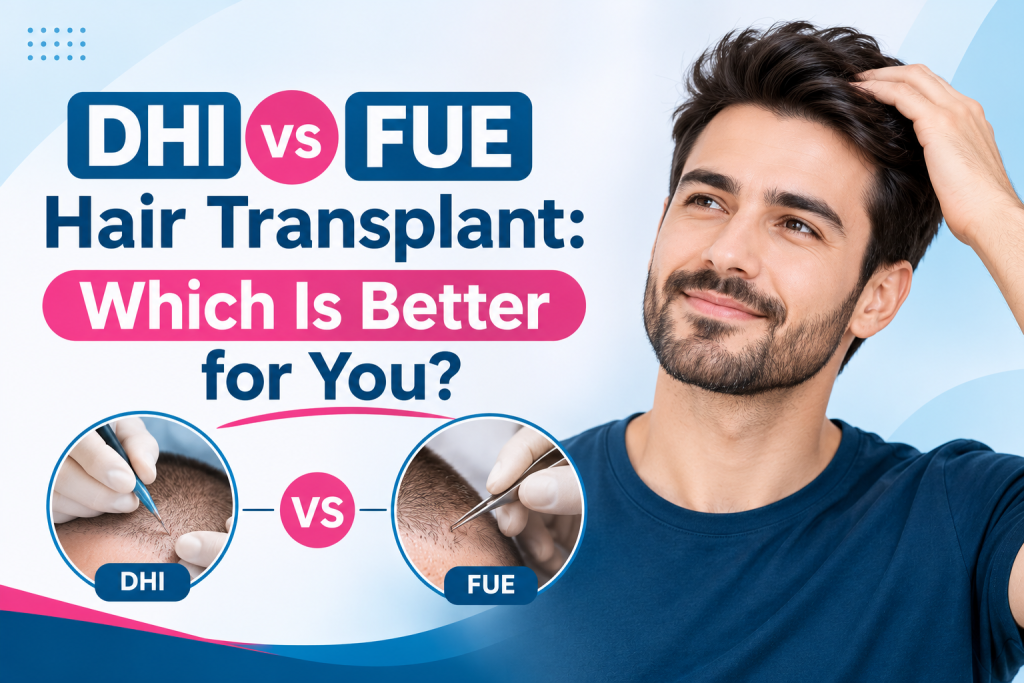
DHI means Direct Hair Implantation. It is a form of FUE. The grafts are taken out in the same way. The difference is in the placement.
DHI uses a pen-like tool called an implanter. The grafts load into the pen. The surgeon then places each one straight into the scalp. There is no separate channel-making step.
One point to know: DHI is a brand name. Many clinics call it implant-pen FUE. So when people search “dhi fue,” they are not comparing two different surgeries. DHI is a variation of FUE.
DHI vs FUE: Key Differences at a Glance
Here is a quick view of FUE vs DHI.
| Factor | FUE | DHI |
| Graft placement | Channels first, then grafts | Direct placement with a pen |
| Best for | Large bald areas, high graft counts | Hairline work, gaps, smaller areas |
| Session length | Usually shorter | Often longer |
| Cost | Usually lower | Usually higher |
| Shaving | Often needed | Partial shave sometimes possible |
| Surgeon skill | High | Very high |
When you read about FUE vs DHI hair transplant options online, the table is the heart of it. DHI hair transplant vs FUE is mostly a question of placement style, area size and budget. The extraction step is the same.
Pros and Cons of Each Method
FUE pros
- Proven and widely used
- Works well for big sessions
- Usually more affordable
FUE cons
- Graft angle and density depend on the surgeon’s channel work
- Often needs a full shave
DHI pros
- More control over angle and direction
- Grafts spend less time outside the body
- Partial shave may be possible in some cases
DHI cons
- Longer procedure
- Higher cost
- Fewer grafts per session in many cases
Here is a fair point. No strong head-to-head studies prove that DHI gives denser results than a well-done FUE. A skilled team can deliver great results with either.
Is DHI Better Than FUE?
Not always. DHI is not automatically better than FUE.
DHI may suit you if you want hairline refinement, need a smaller session, or hope to avoid a full shave. FUE may suit you if you have advanced baldness, such as Norwood 4 or above, and need a high graft count.
Use this short checklist before you decide:
- Age: Very young patients may still be losing hair.
- Donor density: Thin donor hair limits how many grafts you can move.
- Hair type: Thick or curly hair can give more coverage.
- Expectations: Be clear about the look you want.
What about DHI hair transplant reviews? Read them with care. Look for before-and-after photos with dates. Be wary of generic praise and paid reviews. Real reviews mention the doctor, the aftercare and the timeline.
DHI vs FUE Hair Transplant in Pune: Cost, Recovery and Results
Patients in Pune often ask about DHI vs FUE hair transplant in Pune before anything else. Let us cover cost, recovery and results.
Cost. Most clinics charge per graft. The price changes with the clinic, the graft count and the technique. DHI usually costs more per graft. A consultation is the only way to get an accurate quote for your case.
Recovery. Many people return to desk work within a few days to a week. Your surgeon sets the exact plan. In Pune’s summer heat and monsoon humidity, follow your aftercare closely. Keep the scalp clean and avoid sweat and dust in the first days.
Results. Shedding of transplanted hair at 2 to 4 weeks is normal. New growth often starts around months 3 to 4. Full results can take 12 to 18 months.
Whether you choose DHI hair transplant in Pune or FUE hair transplant in Pune, patience is part of the process. Good hair transplant treatment in Pune always includes a written aftercare plan.
How to Choose the Best Hair Transplant Clinic in Pune
The best hair transplant clinic in Pune is not the cheapest one. It is the one that is open about the process. Use this checklist:
- A qualified dermatologist or surgeon performs the key steps
- The graft count is clear before surgery
- Before-and-after photos are real and dated
- The clinic follows strict hygiene and safety rules
- You receive a written aftercare plan
Be careful with very low prices. Also avoid clinics where technicians, not doctors, do the main work.
At Skinovate, every plan starts with a scalp and donor-area assessment. We then explain which method suits you, and why. If FUE is the better fit, we say so. If DHI is, we say that too.
Conclusion: Make the Right Choice for Your Hair
The DHI vs FUE hair transplant choice comes down to your hair loss pattern, donor hair and goals. FUE is a strong pick for large areas. DHI shines for fine hairline work and smaller sessions. Both can look natural when done well.
Not sure which method is right for you? Contact Skinovate today and book your appointment for a personalised scalp assessment. Our team in Pune will review your hair, explain your options and give you a clear plan. Call or WhatsApp us now, or fill in the form to book your consultation.
