


Written by Skinovate Content Team | Medically Reviewed by Dr. Sushil Chaudhary On March 30, 2026
Table of Contents
- Introduction
- What is Rhinoplasty
- Procedure of Nose Surgery
- Risks, Results & Cost Factors
- Conclusion
Introduction
A well-shaped nose helps to improve overall facial appearance and self confidence. That is why so many people today consider nose job surgery not only for cosmetic reasons. With advancements in medical technology, the procedure has become safer than before. Still before making any decision, it is important to clearly understand how the surgery works, what recovery looks like and what risks are involved. Also having the right knowledge helps to reduce fear and builds confidence. So this guide explains everything in simple and easy language so you can make a proper choice.
What is Rhinoplasty
In simple terms, Rhinoplasty procedure is a surgical procedure done to change the shape, size or internal structure of the nose. It is one of the most popular cosmetic procedures worldwide. The nose job is customized for every individual based on their facial features and desired outcome. It not only improves appearance but can also fix internal nasal problems that affect breathing.
Types of Rhinoplasty
- Cosmetic rhinoplasty – It is a nose lift procedure done to improve appearance by reshaping the nose, removing bumps, refining the tip or making the nose more balanced with facial features.
- Functional rhinoplasty – It focuses on improving breathing by correcting internal issues like a deviated septum or blocked nasal passages.
- Revision rhinoplasty – This is performed to correct or improve the results of a previous nose surgery if the outcome was not as expected.
- Non-surgical rhinoplasty – In this, it uses dermal fillers to make temporary adjustments in shape without actual surgery and it is suitable for minor corrections.
Procedure of Nose Surgery
The rhinoplasty procedure is a step-by-step surgical process which is performed by a trained plastic surgeon. It usually takes 1 to 3 hours which also depends on the complexity of the case. Below is a detailed explanation of each step:
1. Consultation
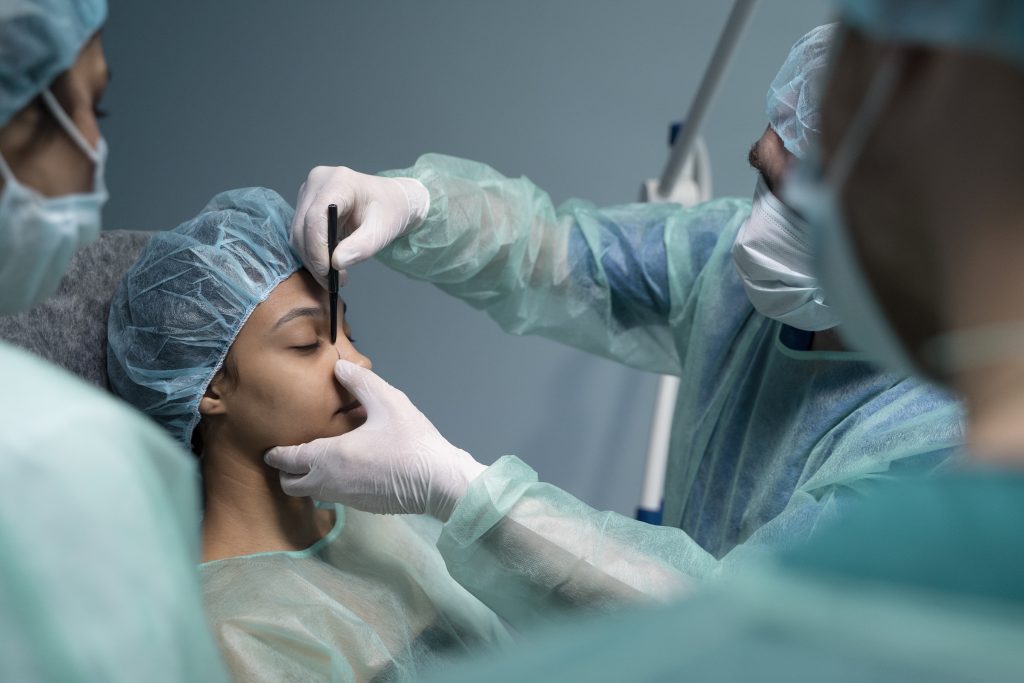
This is the first and most important step before surgery. The doctor carefully examines your nose structure, skin type and facial proportions. You can openly discuss what changes you want and what concerns you have. The surgeon will explain what results are realistically possible and may even show sample images or simulations. This helps to set clear expectations and builds trust between you and the doctor.
2. Anesthesia
Before starting the surgery, anesthesia is given so you do not feel any pain or discomfort. And depending on the case, the doctor may use local anesthesia with sedation or general anesthesia. This helps to make sure that you remain relaxed and comfortable throughout the procedure. The type of anesthesia is decided based on your health condition and the complexity of the surgery.
3. Incision
The surgeon makes small incisions (cuts) to access the bone and cartilage of the nose. These cuts are usually made inside the nose (closed rhinoplasty) so there are no visible scars. In some cases, a small cut is made on the outer part between the nostrils (open rhinoplasty). The placement of incisions is done very carefully to make sure there is minimal scarring.
4. Reshaping the Nose
This is the most important step of the surgery. The surgeon reshapes the nose by adjusting bone, cartilage or both. This may include removing excess bone, smoothing a bump, refining the tip or narrowing the nostrils. In some cases, cartilage from another part of the body may be used to build structure. The goal is to create a natural look that matches your facial features.
5. Functional Correction
If you have breathing issues, they can be corrected during the same surgery. Problems like a deviated septum or blocked nasal passages are treated to improve airflow. This means the surgery not only improves appearance but also helps to improve nasal function. So combining both cosmetic and functional improvements gives better overall results.
6. Closing the Incision
After reshaping is complete, the skin is carefully placed back over the new structure. The incisions are then closed using fine stitches. These stitches are placed in a way that promotes proper healing and minimizes visible marks. In many cases, internal stitches dissolve on their own over time.
7. Splint and Dressing
A splint is placed on the outside of the nose to support and protect its new shape during healing. In some cases, soft packing may be placed inside the nose to control bleeding and support internal structures. This step is important to make sure that your nose heals properly and maintains the desired shape.
8. Recovery
After the surgery, you will be monitored for a few hours. Most patients can go home the same day or the next day. Swelling and mild discomfort are normal in the initial days. The splint is usually removed after a week and you can slowly return to normal activities. Full recovery takes time and proper care is essential for the best results.
Risks, Results & Cost Factors
Risks
Many people ask if nose surgery is safe and the answer is yes when it is done by a qualified and experienced surgeon. However, there are still some nose surgery risks involved like infection, swelling, bleeding or temporary breathing difficulty.
Results
Rhinoplasty can give very satisfying and natural-looking results when expectations are realistic. It improves facial balance and helps you to boost self-confidence. However, the results are not immediate, as swelling takes time to reduce. Most people start seeing visible changes within a few weeks while the final shape may take a few months. A common concern is that is rhinoplasty painful? but the procedure itself is painless due to anesthesia and post-surgery discomfort is usually mild and manageable.
Cost Factors
If you are planning this procedure, you might wonder how much a nose job costs in India. The cost depends on several factors such as the surgeon’s experience, clinic location and the complexity of the surgery. Additional expenses may include hospital charges, anesthesia and follow-up care.
Conclusion
Rhinoplasty is a widely performed procedure that can help you to improve both the appearance and function of the nose. With proper planning and the right surgeon, it can deliver long-lasting and satisfying results. So, understanding the procedure, recovery, risks and cost helps you to feel more confident about your decision. Always take your time, ask questions and consult a qualified expert before moving forward. A well-informed decision will lead to better outcomes and a smoother experience.
