


Written by Skinovate Content Team | Medically Reviewed by Dr. Sushil Chaudhary On February 19, 2026
Table of Contents
- Introduction
- What Is Uneven Skin Tone?
- What Is Pigmentation?
- Uneven Skin Tone vs Pigmentation: Key Differences
- Treatment Options for Both
- Conclusion
Introduction
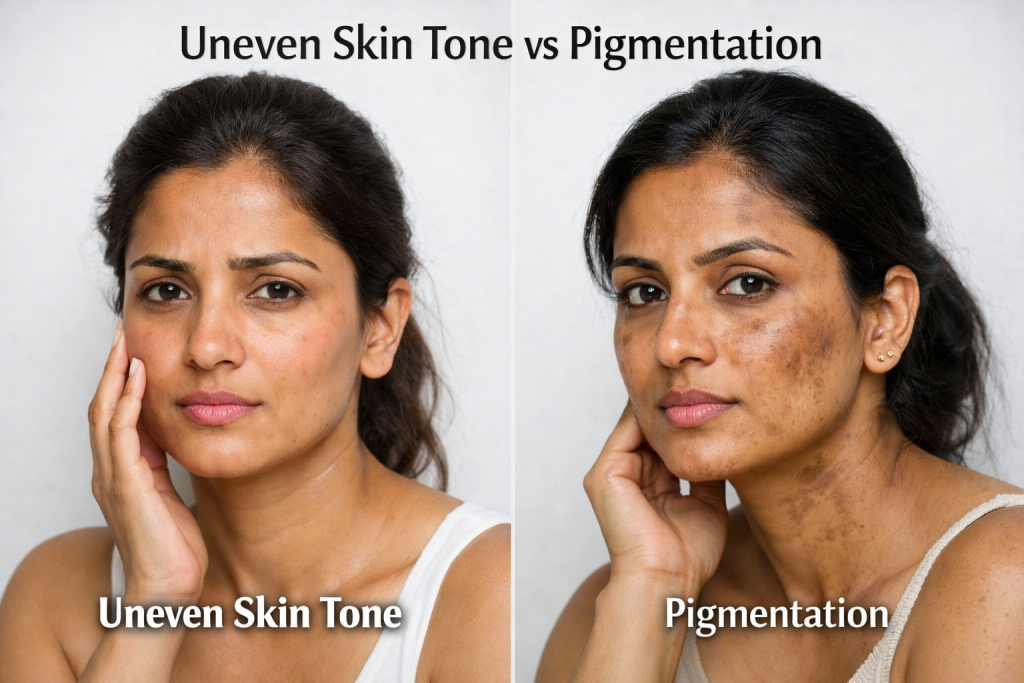
Many people feel confused and underconfident when they notice dullness or dark patches on their face. They often search about uneven skin tone vs pigmentation and assume that both are the same condition. While they may look similar at first, they are actually different skin concerns with different causes and treatment approaches.
Uneven tone usually affects overall brightness and smoothness of the skin. Pigmentation, on the other hand, involves excess melanin that forms darker, more defined patches. Understanding the difference between uneven skin tone vs pigmentation helps you to choose the right skincare routine and professional treatment instead of guessing.
What Is Uneven Skin Tone?
Uneven skin tone means your skin color is not consistent across your face. Some areas may look slightly darker, red or dull compared to others. It usually affects overall glow rather than creating sharp dark spots.
This condition is often mild and can improve with proper skincare and lifestyle changes. In some cases, professional uneven skin tone treatment may be recommended to restore brightness and balance.
Some Common Causes of Uneven Skin Tone:
- Sun exposure without protection
- Acne marks or minor scars
- Dry or dehydrated skin
- Pollution damage
- Lack of exfoliation
- Irregular skincare routine
What Is Pigmentation?
Pigmentation happens when the skin produces excess melanin. This leads to noticeable dark spots or patches that are more defined than simple uneven tone. These patches can be light brown, dark brown or greyish depending on the depth.
Pigmentation can develop due to hormonal changes, sun damage or inflammation. Unlike uneven tone, it usually does not fade easily without targeted pigmentation treatment.
Common Causes of Pigmentation:
- Hormonal imbalance (PCOS, pregnancy, thyroid issues)
- Prolonged sun exposure
- Post-acne dark spots
- Melasma
- Skin injury or inflammation
- Certain medications
Uneven Skin Tone vs Pigmentation: Key Differences
| Comparison Point | Uneven Skin Tone | Pigmentation |
| Basic Definition | Skin appears dull or slightly patchy | Dark spots or patches caused by excess melanin |
| Main Cause | Surface-level imbalance | Overproduction of melanin |
| Appearance | Mild shade variation | Clearly visible brown, grey or dark patches |
| Depth in Skin | Mostly epidermis (surface layer) | Can affect deeper layers (epidermis or dermis) |
| Color Intensity | Light variation | Medium to dark discoloration |
| Hormonal Link | Rare | Common due to melasma, pregnancy or PCOS |
| Post-Acne Effect | Mild marks fade gradually | Dark post-inflammatory spots may remain longer |
| Skin Texture | Usually smooth | Usually smooth but darker in color |
| Severity | Mild to moderate | Moderate to severe |
| Need for Medical Treatment | Not always necessary | Often requires professional care |
| Recurrence Rate | Lower | Higher without maintenance |
| Improvement Speed | Faster | Slower and needs multiple sessions |
| Age Group Affected | All age groups | More common in adults |
Treatment Options for Uneven Skin Tone
Uneven tone usually responds well to treatments that focus on improving texture, hydration and brightness. The approach is generally gentle and works on surface-level correction. The best treatment for uneven skin tone depends on your skin sensitivity and underlying cause.
Some of the treatment options that you can consider is:
- Medical-grade brightening facials
- Hydration and glow therapies
- Gentle exfoliation procedures
- Vitamin C and antioxidant-based skincare
- Sunscreen protection
- Mild resurfacing treatments
Treatment Options for Pigmentation
Pigmentation often requires more targeted and deeper corrective procedures. The type of treatment depends on whether the pigmentation is superficial or deep. A dermatologist evaluates the skin and suggests a personalized plan. The overall pigmentation treatment cost varies based on technology, sessions required and severity of the condition.
Treatment Options:
- Chemical peel for pigmentation to remove damaged upper layers
- Laser treatment for pigmentation for deeper discoloration
- Combination therapies for stubborn cases
Conclusion
Although uneven skin tone and pigmentation may appear similar, they are different conditions that require different treatment approaches. Uneven tone affects overall brightness and texture while pigmentation involves deeper discoloration caused by excess melanin.
Correct diagnosis is the key to effective treatment. If your dark spots or uneven areas are persistent, it is time to consult a qualified skin specialist to ensure you receive the right solution at the right time.
