


Written by Skinovate Content Team | Medically Reviewed by Dr. Sushil Chaudhary On September 07, 2026
Table of Contents
- What Is Skin Type, and Why Should You Care?
- The Five Face Skin Types
- How to Identify Your Skin Type at Home
- Skin Type vs Skin Condition
- Why Your Skin Type Can Change
- What Happens in a Professional Skin Analysis
- Conclusion: Start With Your Skin Type
- FAQs: How to Know Your Skin Type
A new serum stung your cheeks last week. Your cousin swears by it. So what went wrong? Most of the time, the product was fine. It just wasn’t made for your skin.
Learning how to know your skin type fixes this. It takes a clean face, a mirror and a little patience. Below, we walk you through three simple checks and show you how to read the results.
Every week at Skinovate in Pune, someone sits across from us and asks, “What is my skin type?” This is how we help them work it out.
Key Takeaways
- Face skin falls into five broad groups: normal, oily, dry, combination and sensitive.
- A product-free face and an hour of waiting will tell you a lot.
- Your skin can shift with seasons, hormones, stress and where you live.
- Skin type describes oil and water. Acne or eczema describe a problem. They are not the same thing.
- If your results confuse you, a dermatologist can settle it quickly.
What Is Skin Type, and Why Should You Care?
Your skin type is your skin’s natural balance of oil and water. Most of it comes from your parents. Oil, also called sebum, is what your skin glands release to keep the surface soft.
Once you know your skin, shopping gets easier. A heavy cream on oily skin can clog pores. A foaming wash on dry skin can leave it raw. The right match feels almost boring, and that is the goal.
Think of a lock and key. A product only works when it fits. Understanding the types of skin is how you find that fit.
The Five Face Skin Types
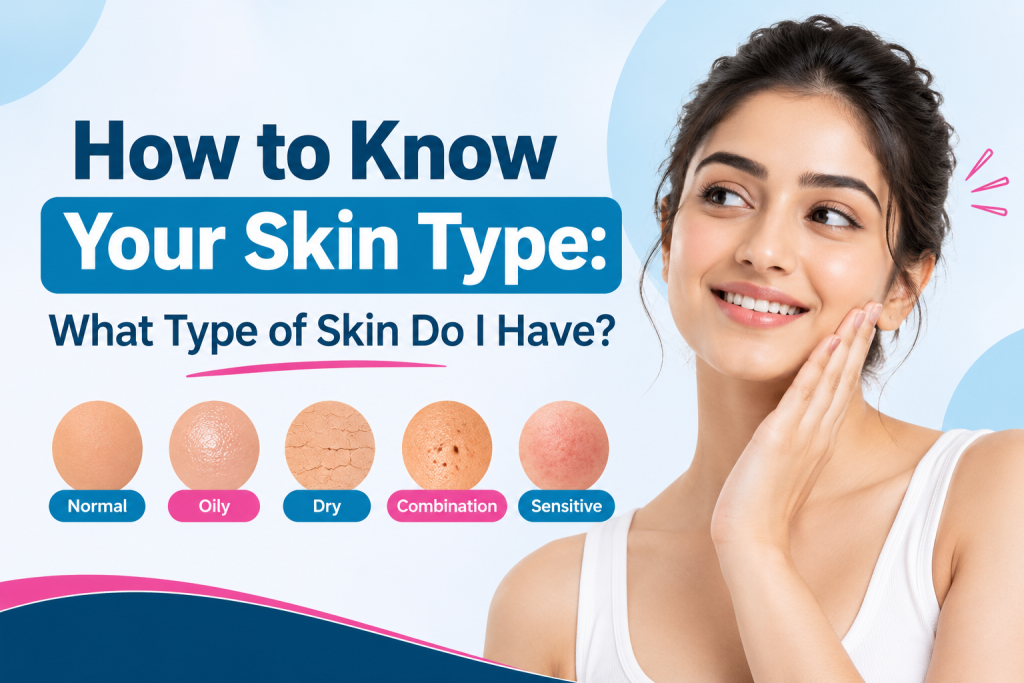
Here is how each of the five face skin types usually looks and feels.
- Normal: Even and comfortable. Rarely shiny, rarely tight.
- Oily: A glossy look by midday. Pores seem bigger, and spots show up often.
- Dry: Skin feels stretched after washing. You may see rough patches or dullness.
- Combination: A greasy T-zone with calmer, drier cheeks.
- Sensitive: Quick to sting, itch or turn red.
Use this table as a shortcut:
| Skin type | Everyday feel | Product tip |
| Normal | Comfortable, balanced | Keep the routine simple |
| Oily | Shiny, greasy | Lightweight, oil-free gels |
| Dry | Tight, rough | Creamy, rich moisturisers |
| Combination | Oily centre, dry cheeks | Light formulas, extra care on dry zones |
| Sensitive | Stings, flushes | Fragrance-free, few ingredients |
A quick clinical note: sensitivity describes how skin reacts, so it can overlap with any other type. Someone can have oily and sensitive skin at the same time.
Read Also: Find Your Skin Type and Customize Your Skincare Routine
How to Identify Your Skin Type at Home: 3 Simple Tests
Want to find your skin type without leaving the house? Pick a calm day. Use no new products and skip the heavy workout beforehand.
- The empty-face test. Cleanse with a mild face wash and dry gently. Put nothing on your skin. Sit for 30 to 60 minutes, then notice what your face tells you.
- The blotting sheet test. Press a fresh sheet onto your forehead, nose, cheeks and chin, one at a time. Hold it up to the light and see where oil is collected.
- The close-up check. Stand near a window. Look for shine, dry flakes, enlarged pores or tight patches.
Here is how to read what you find:
- Oil all over: oily skin
- Tightness or flaking: dry skin
- Oil in the T-zone only: combination skin
- Calm, even and comfortable: normal skin
- Burning, itching or flushing: sensitive skin
This is the quickest way to learn how to know face skin type. Want a steadier answer on how to check skin type of face? Repeat the test on two or three different mornings. One day can mislead you.
Skin Type vs Skin Condition
People often swap these two terms. They mean different things.
Skin type is about oil and water. A skin condition is a health problem, such as acne, eczema, rosacea or dark patches. Skin tone is a third idea. It describes colour, not oiliness.
Here is a case we see often. One patient has oily skin that still feels tight. That is dehydration, which means a lack of water. Another has dry skin and stubborn spots. Both are real. So when you work out how to identify skin type, keep the type and the condition apart.
- Age
- Hormones
- Stress and sleep
- Some medicines
- Harsh soaps or strong products
- Burning or stinging with almost every product
- Redness that does not settle
- Breakouts that keep coming back
- Repeated or painful acne
- Ongoing redness or itching
- Sudden dryness or flaking
- Dark patches that are spreading
- No improvement after 6 to 8 weeks of a simple routine
- History: The doctor asks about your routine, medicines, family history and triggers.
- Examination: They check oil level, hydration, skin barrier health and any visible concerns.
- Plan: You get a personalized skincare plan. If needed, the doctor also suggests treatment.
Why Your Skin Type Can Change
Your skin type is not a lifetime label. It moves with you. Common triggers include:
- Growing older
- Hormone shifts, such as puberty, pregnancy or menopause
- Stress and poor sleep
- Certain medicines
- Strong cleansers and scrubs
Place matters too. In Pune, summer heat pushes oil up. Monsoon humidity invites clogged pores. A cool office with the AC on all day can dry you out by evening. Patients often tell us their skin “turned on them” after a move or a change of season.
Re-test each season. The routine that suits you in March may not suit you in July.
Read Also: Skincare Routine: Tips for Oily, Dry &Glowing Skin
When the Result Doesn’t Add Up
Sometimes a home test leaves you more confused. See a doctor if you notice:
- Stinging with nearly every product
- Redness that stays
- Breakouts that keep returning
These often point to a skin condition, not just a skin type. A basic routine rarely fixes them alone.
When to See a Dermatologist for Skin Treatment in Pune
Home tests are a good first step. Some problems need a trained eye. Book a visit if you have:
- Painful or repeated acne
- Itching or redness that lingers
- Sudden dry, flaky patches
- Dark marks that keep spreading
- No change after 6 to 8 weeks of a basic routine
Skip trends from social media. Strong active products can hurt skin that is not ready for them. Ask a doctor before you start.
Looking for skin treatment in Pune? Pick a clinic that studies your skin type and your skin condition together. At Skinovate, our dermatologists do exactly that before they suggest anything.
What Happens in a Professional Skin Analysis
A professional skin analysis goes further than any home test. Expect three parts:
- Conversation: The doctor asks about your routine, medicines, family history and triggers.
- Examination: They check oil, hydration, barrier strength and any visible concerns.
- Plan: You leave with a personalised skincare plan, plus treatment if you need it.
No more guessing at the pharmacy shelf. You learn what to use and what to leave out. The plan follows your skin, not a trend.
Conclusion: Start With Your Skin Type
Knowing how to know your skin type is where good skincare begins. Remember the five groups: normal, oily, dry, combination and sensitive. Run the empty-face test, read your result, and repeat it when the season turns.
Still unsure what your skin needs? Contact Skinovate today and book your appointment for a professional skin analysis in Pune. Our dermatologists will examine your skin, explain what they see and build a clear plan for you. Call or WhatsApp us now, or fill in the form to book your consultation.
