


Written by Skinovate Content Team | Medically Reviewed by Dr. Sushil Chaudhary On June 12, 2026
Table of Contents
-
Introduction
- Why Monsoon Season Is So Rough on Your Hair
- Actual Hair Fall Treatment That Makes a Difference
- Easy Monsoon Hair Care Habits Worth Building
- Natural Remedies for Hair Fall That Actually Work
- When You Should See a Doctor
- Conclusion
Introduction
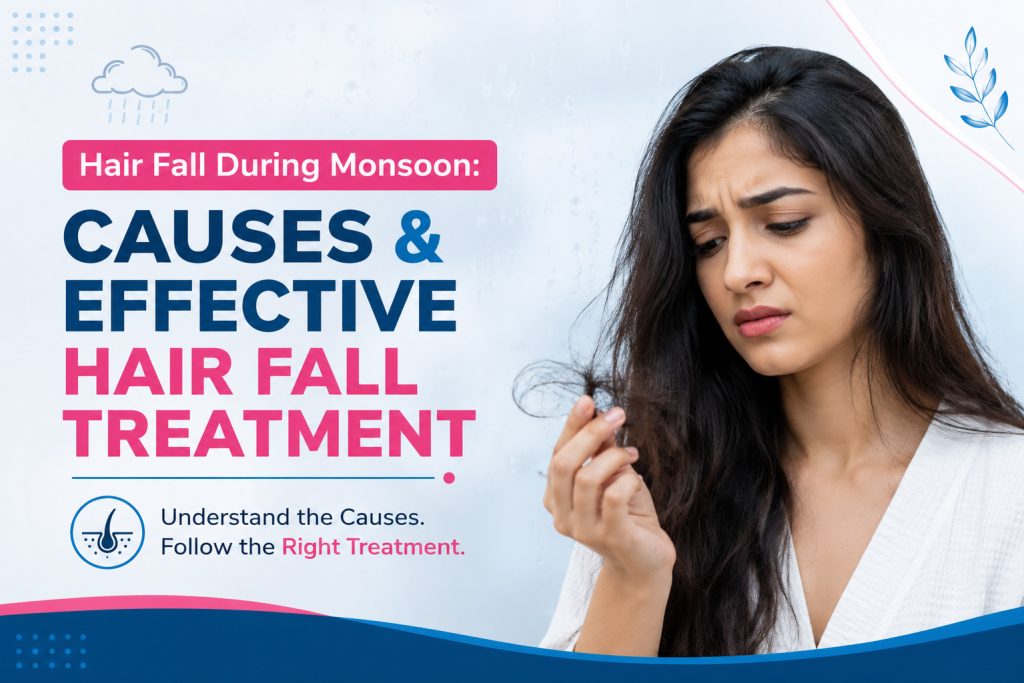
Every monsoon, the same thing happens. You comb your hair and the comb comes back looking like a bird’s nest. You check the shower drain and feel your stomach drop a little. You start counting strands on your pillow in the morning like that is somehow going to make you feel better. Trust me, you are not the only one going through this every single rainy season. If you’re already searching for a hair fall treatment, you’re definitely not alone.
Nobody really explains why it happens properly. Some aunty says apply oil. Some YouTube videos say to stop oiling completely. Your friend swears by some expensive shampoo. Meanwhile your hair keeps falling and you are just standing there confused, wondering which hair fall treatment actually works.
Why Monsoon Season Is So Rough on Your Hair
The moment humidity kicks in, your scalp starts behaving differently. It sweats more, produces more oil, and if you are not cleaning it regularly, all that buildup sits around your follicles like a slow blockage. Weak hair roots happen when follicles stay clogged for too long – the hair literally loosens from the inside and starts shedding more than usual.
Rainwater is another thing people ignore completely. We get drenched, let the hair dry, and move on. But rainwater picks up pollutants and acid from the air. Its pH is different from what your scalp normally handles. Getting caught in rain regularly and not rinsing your hair properly after is one of those quiet habits that adds up over time and makes hair fall in rainy season worse than it needs to be.
Then there is the dandruff problem. Monsoon creates exactly the kind of warm, damp environment where fungus grows on the scalp.
Nutrition is another piece that people overlook. During monsoon many people naturally eat lighter meals and without realizing it they are cutting out the proteins, iron and biotin their hair actually needs to stay strong. Hair notices nutritional gaps faster than almost any other part of your body.
Actual Hair Fall Treatment That Makes a Difference
Forget the 12-step routines. Nobody sticks to those. Here is what genuinely works when done consistently.
Sort Out Your Scalp First
- Everything starts at the scalp. Scalp health is the foundation and if your scalp is itchy, greasy or full of dandruff right now, no oil or serum is going to save your hair until you fix that first.
- Wash your hair two to three times a week – not daily.
- Daily washing strips away the natural oils your scalp needs and makes the roots even more fragile. Use a gentle sulfate-free shampoo.
- If dandruff is already a problem, pick one with tea tree oil or ketoconazole. And rinse properly every single time – leftover shampoo sitting on your scalp blocks follicles just as much as dirt does.
- Scalp hygiene during monsoon is about washing smart, not washing more.
Oiling During Monsoon – Do It Lighter
- People either stop oiling completely or go too heavy with it during rainy season. Both are wrong.
- Thick heavy oils in high humidity trap moisture near the scalp and create conditions where fungus loves to grow.
- Switch to lighter oils during this season – argan oil or jojoba work well. Apply gently to the scalp, wait 30 to 40 minutes and wash off properly.
- That kind of hair nourishment feeds the roots without suffocating them. You do not need to sleep with oil in your hair
Handle Wet Hair Like It Is Fragile – Because It Is
- Wet hair stretches and snaps far more easily than dry hair. Most hair breakage during monsoon is not even about root weakness – it is about rough handling when hair is wet.
- Pat dry gently, never rub. Only use a wide tooth comb after your hair is mostly dry. Skip tight ponytails and buns on humid days when your roots are already under stress from the weather.
Easy Monsoon Hair Care Habits Worth Building
Good rainy season hair care is less about products and more about small daily habits.
Change your pillowcase regularly during monsoon. Your scalp sweats more at night and a dirty pillowcase means bacteria sitting against your skin for hours every night. Eat eggs, lentils, nuts, leafy greens – your hair needs protein, iron and zinc to support healthy hair growth and these foods deliver exactly that. Drink enough water. Dehydration shows up in your scalp and hair texture before you even notice it elsewhere.
Natural Remedies for Hair Fall That Actually Work
These natural remedies for hair fall have been around forever for good reason.
Aloe vera gel on the scalp before washing soothes irritation and balances pH. Onion juice strengthens weak hair roots through its sulfur content – it smells terrible but it works, apply for 30 minutes then wash out. Fenugreek paste from soaked methi seeds applied to the scalp is one of the oldest monsoon hair care tips that still holds up today.
When You Should See a Doctor
If heavy shedding continues beyond four to six weeks despite trying everything, see a dermatologist. Excessive hair fall in rainy season that does not slow down could point to iron deficiency, thyroid issues or a scalp condition needing real medical hair fall treatment – not just home remedies.
Conclusion
Monsoon hair fall is something most people go through but very few handle properly. Between humidity and hair fall, blocked follicles, dandruff and hair fall, and poor nutrition during the season – it all quietly piles up. But fixing it is not complicated.
Clean scalp, gentle handling, light oiling, good food and consistency. That is genuinely all monsoon hair care comes down to. Get the basics right and your hair will be in a much better place before the season even ends.
